
Every Christmas, We Eat a Fish That Never Swam in Our Waters
In Portugal, salted cod carries the taste of saudade

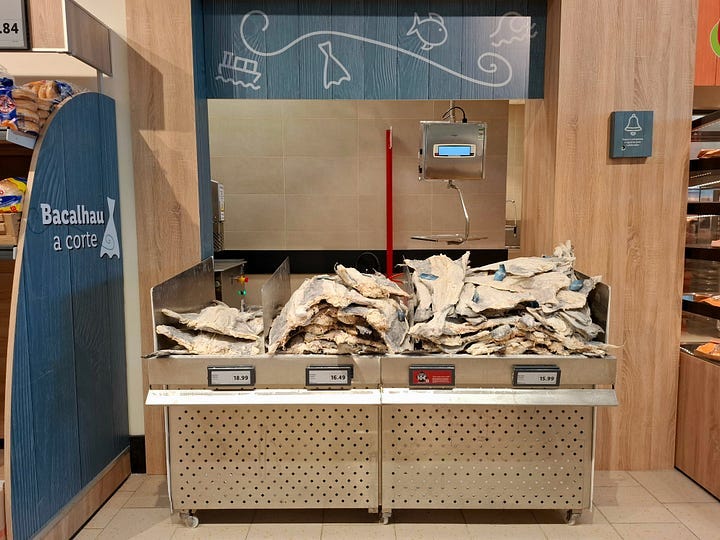
Christmas Eve is just two days away, and I’ll soon dig into my favorite fish dish of the year, Bacalhau com Todos, nothing fancy, just cod with potatoes, cabbage, carrots, a boiled egg, and a drizzle of olive oil and vinegar.
This year, cod was overpriced. It always is, but this December it feels heavier on the wallet. Still, the most expensive bacalhau is the first to go. Icelandic cod tends to fly from supermarket shelves even if it costs more than 30 euros a kilo. The Norwegian cod, cheaper, always stays behind a little longer.
But here in Portugal, bacalhau is the one thing we can’t skip. No matter how the prices climb.
And why is that?
Why did this dry, northern fish, a stranger to our seas, make it to the Portuguese Christmas table?
The story of bacalhau goes back centuries, far beyond our kitchen, to oceans and markets across Europe and the New World.
A fish that never swam here
The bacalhau tradition didn’t begin at the table. It came from the cold seas further north.
It’s a story of saudade.
The cod we soak and boil, the fish my grandfather insisted had to be the “English” kind, has a story that begins far from Portuguese homes, spanning across an ocean and five centuries.
Now I know why my grandfather always bought “bacalhau inglês.” It never came from England, of course, but the name stemmed from the original merchants and a special kind of curing, which we today call Bacalhau de Cura Amarela (yellow-cured cod) because of its yellowish color.
For centuries, Portuguese importers relied on English traders to bring cod to our shores, and the curing method made it stand out from local preservation techniques.
Back in the fifteenth and sixteenth centuries, Portuguese sailors left home chasing spice and gold, but instead they found cod. In the waters near Newfoundland and the North Sea, the fish were endless. Fishermen said you could drop a basket and pull it back full.
For a Catholic country like Portugal, salted cod made a lot of sense. There were dozens of fasting days when you couldn’t have meat. Fish was allowed, but it spoiled fast, especially inland. Salted cod was a great option for sailors or their families back home.
Today, the origins of bacalhau are far more diverse. Yet somehow, the tradition remains the same.
Still, the sea has its own language of saudade here in Portugal. The men went north for the faina maior, the great cod campaign, leaving wives and children to wait for letters that sometimes never came.
Saudade served at the Christmas table
Today I had lunch with my mother. Before we sat at the table, a ritual repeated itself.
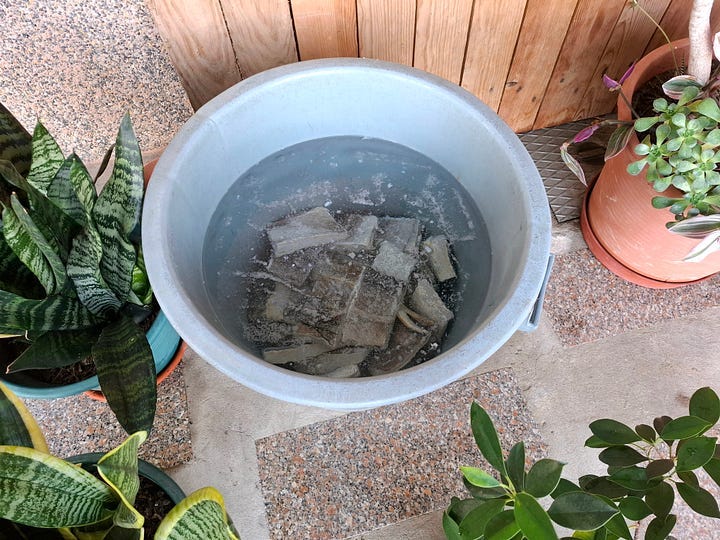
I watched her desalt the cod, changing the water once again. I couldn’t help but think about how many times I’ve seen this same gesture..
For a couple more days, she will let the fish soak, changing the water until the salt fades and the flesh turns soft again.
For us, the Portuguese, bacalhau will always be saudade, salted and dried. It carries in its salt a memory of distance and the longing for return. When we share it at the table on Christmas Eve, we honor those who are no longer with us.
José Saramago once wrote that Portugal is a stone raft, a small piece of land tied to the Atlantic. Bacalhau is a remembrance of the sea and those who chased it far away from home, while their wives salted the fish with the tears of saudade.
For centuries, here in the Portuguese North, when bread ran short, salted cod filled the gap. When families left for France, Brazil, or America, they carried recipes folded in memory.
This is why today we have so many recipes with cod: À Brás, à Gomes de Sá, the same fish, cooked a hundred ways, each dish a small act of remembrance. We found a thousand and one ways to make a meal richer with cod.
My grandmother used to say that cod once nourished the poor because it didn’t demand much, just patience and water. You can’t rush bacalhau. It softens only in time.
Soon, we will sit at the table and hear the same questions. “Did the cod soak too long?” “Is it salted?” Doesn’t matter. What matters are these small rituals stitching one generation to the next.
In my mother’s hands, bacalhau is a memory made visible. My grandmother passed away on Christmas Eve, and though Mom may not show it, I know that for her, the dish will always have a bit more salt.
Even when Mom worked in Switzerland, she always came back. I remember how one year she was running a fever, and against the doctor’s orders, she made the two-day trip by bus to make it home in time for Consoada.
Bacalhau tastes different when you’re far from home. I learned it the hard way during my first year in Brussels.
Two days to Christmas
Now I’m home again. Christmas Eve is two days. My mother’s house already smells of it. Rain since morning. Fog pressing against the coast. Mom moves between the stove and the table, tasting the broth, humming softly without realizing.
Soon, I will help her set the table. For now, I stand in the doorway. Every year feels the same. Same ritual. Same gestures. Same quiet promise.
Maybe every meal we love tells the story of where we’ve been. Who we’ve become. And even before it’s served, bacalhau tastes like both. For now, it’s still soaking. It’s salt fading with every water change.
Rui Alves is a language teacher, published author, international book judge, and publisher. He runs Alchemy Publications and serves as editor-in-chief for Engage on Substack, Life Unscripted, Musicverse, Writelicious, The Academic, Portugal Calling, Engage on Medium, Rock n’ Heavy, Beloved, Zenite, Poetaph, Grind, and Babel.
A little support goes a long way! If you’d like to help me keep creating, you can do so at my Ko-fi page or consider becoming a paid subscriber here on Substack.